What Collecting Digital Art Taught Me About What Matters Onchain
I came into crypto for investment due diligence and ended up collecting tokenized art. Here's what that taught me about provenance, permanence, and what onchain infrastructure actually needs to do for a collection to survive.
 Brett Williamson/May 11, 2026/ethereumtokenizationcompany
I collect art. I've been collecting traditional art for a while, and a few years ago, tokenized art became part of that; works by Beeple, William Mapan, Jake Fried, LoVid, Matt Kane, and many more.
I didn't come into crypto looking for art. I came in to evaluate emerging networks as part of investment due diligence. Along the way, I found a community that was welcoming and deeply engaged with the possibilities of tokenized creation. It became clear that tokenized assets weren't a passing experiment.
That conviction led me into collecting tokenized art, primarily on Ethereum. What started as curiosity became a focused effort, finding artists I believed in, building a collection with intent, and eventually formalizing it as The Gremlin Collection. The deeper I went into collecting, the more I understood about what the infrastructure underneath actually needed to do. That's part of what brought me to Hgraph.
What a Collector Actually Cares About
Most of the conversation around token standards happens from the builder's perspective. As a collector, the concerns are different: provenance and permanence; whether the work being collected is going to be there in ten years.
The standard behind most digital art, ERC-721, gives every token a unique ID and an owner, but the decisions artists and platforms make on top of that determine whether a work is built to last or built to disappear.
Provenance
Every time a tokenized artwork changes hands, that transfer gets recorded permanently onchain. A public record of every owner that work has ever had, from mint to now.
In traditional art, provenance lives in gallery records, auction house databases, certificates of authenticity. All centralized, and all dependent upon someone keeping the lights on. A gap in provenance can have an outsized impact on the value of a work.
With tokenized art, the provenance is the chain itself. It goes all the way back to the mint, and for anyone thinking about art in terms of decades, that matters.
Permanence
This is the thing most collectors don't think about until it's too late.
A tokenized artwork points to metadata; the name, description, and image. Where that metadata lives determines whether the art is permanent or fragile.
If it lives on a project's server, the art is only as durable as that server. Domain expires, company folds, someone changes the content, the token still exists but the art is gone.
Decentralized storage like IPFS is better. The content can't be altered as long as someone is hosting it, but it's still dependent on the hosting.
The most durable approach is fully onchain, the art itself lives in the smart contract. Autoglyphs does this. The tradeoff is cost, but the result is art that can't be taken down or altered, it's there as long as the chain is running.
When I'm looking at a work, one of the first things I check is where the metadata lives. While it's not the most exciting part of collecting, it's the part that determines whether a collection survives.
The Artists
Technical understanding is the foundation, but the artists are the reason any of this is worth caring about.
The collection spans a wide range of disciplines. Tyler Hobbs, William Mapan, and Snowfro writing code that produces visual work. Jake Fried building hallucinatory animations frame by frame with ink and white-out. LoVid blurring the line between the natural and the technological with glitched photoscans and handmade electronics. Beeple's relentless daily output that documented an entire era of digital creation. Jan Baumgartner's minimalist explorations of color and space. Nishant Malhotra's painterly practice moving between densely layered figuration and abstraction. Conceptual work from Rhea Myers and Sarah Meyohas, and that's not the full list.

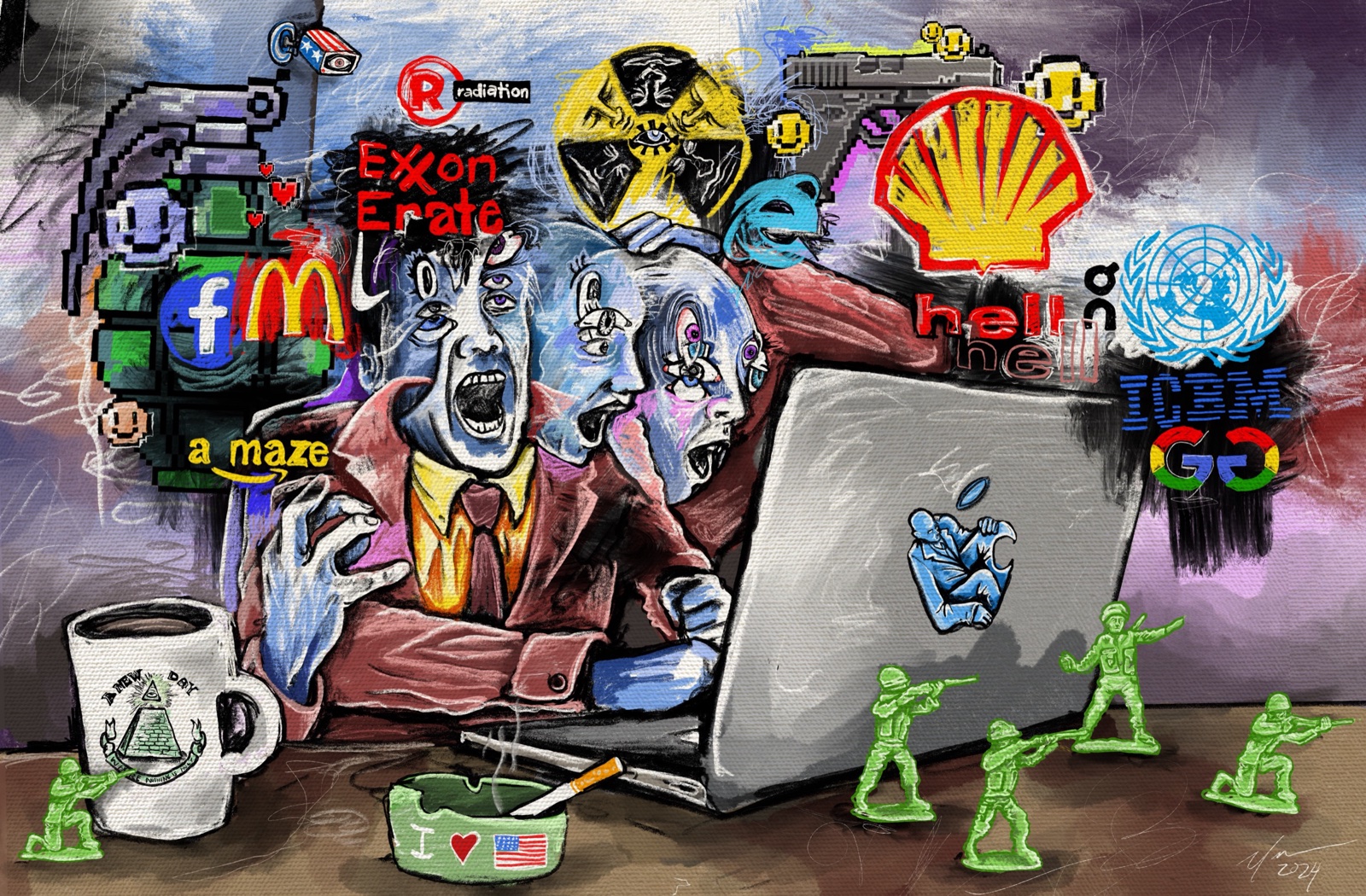
What ties the collection together isn't a genre or an aesthetic, it's intent. I collect work I believe in, artists with a clear voice and conviction in what they're making. The token is how it's owned and preserved, not what it is. The collection is organized around works that move, challenge, or endure.
How This Connects to What I Do
Collecting is part of what pulled me into infrastructure work.
The questions are the same on both sides. Will the art survive? Can ownership be proven? Will the metadata be there in 2035? At Hgraph, we build the infrastructure that makes that possible; indexing token data, tracking ownership, making transfer history queryable. The same problems I think about as a collector, just from the other side.
As our Ethereum indexing expands, I'll be using our own tools to track and manage the collection. Looking forward to building something I'll actually use myself.
Long Game
The market will do what it does, and the art will continue to be the art. A work that moves me today is likely going to move me in ten years; although, there are almost always exceptions. The token standard ensures ownership can be proven.
If you're interested in browsing the collection, you can find it at tgc.art.
Build on the same data.
Query live onchain markets across every chain we support through one schema and one key.