Digital Assets @ Duke: Signals From The Next Phase Of Onchain Finance
Across regulators, institutions, builders, and investors, one idea was consistent: this market is a stress test. Not just for crypto, but for any organization working with digital assets.
 Brett Williamson/Feb 10, 2026/company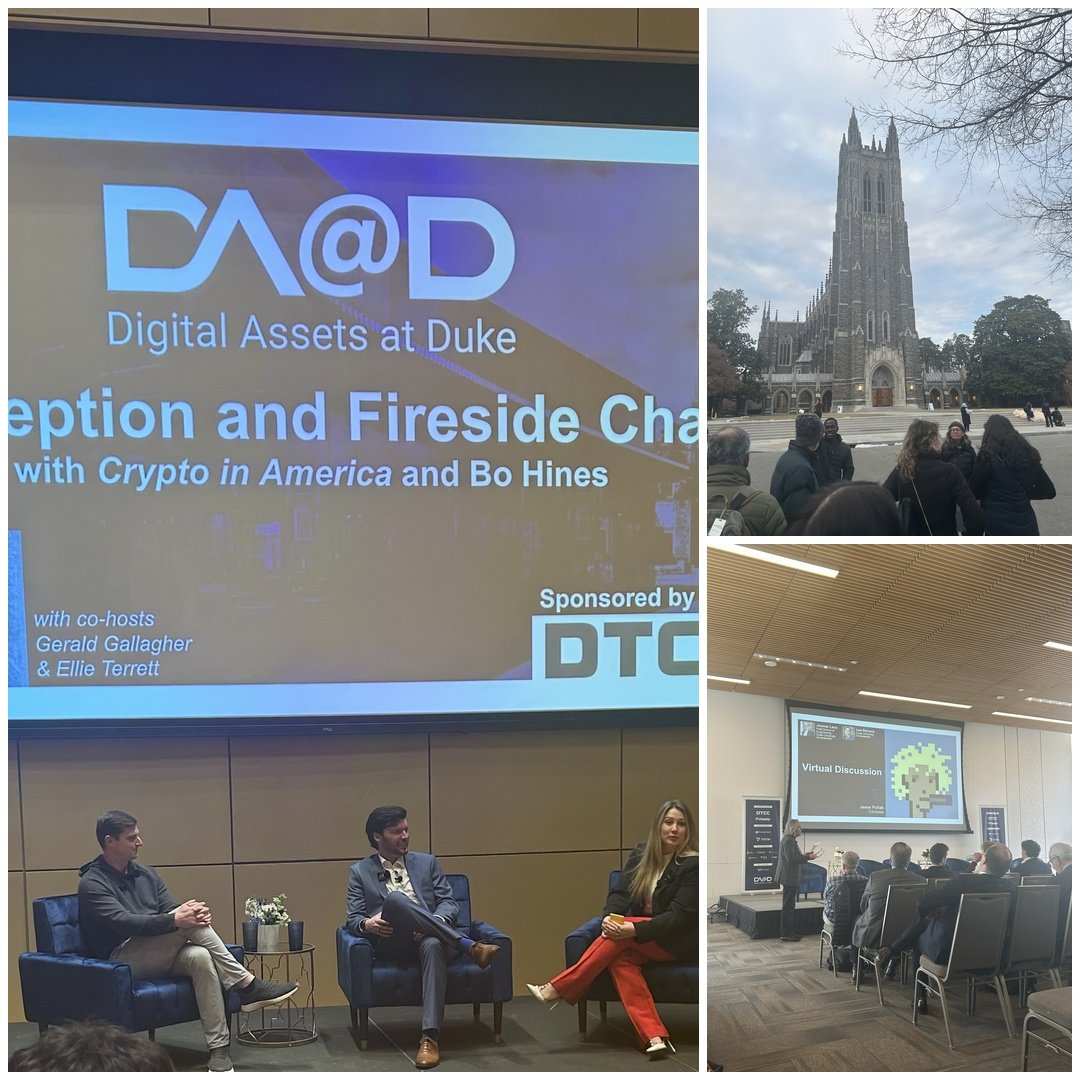
I spent February 4--6 at the Digital Assets @ Duke conference. Across regulators, institutions, builders, and investors, one idea was consistent: this market is a stress test.
Not just for crypto, but for any organization working with digital assets. In this environment, ambition matters less than execution.
Rather than cataloging speakers or projects, this post distills a few core themes that feel most durable as onchain finance moves from experimentation into real infrastructure.
Institutions Are Optimizing, Not Evangelizing
The institutional shift is no longer ideological, it's operational.
What matters now:
- Capital efficiency, especially around collateral
- Consistent treatment across custody, risk, and operations
- Systems that integrate without introducing new failure modes
A single design question underpins much of this: Is the token the asset, or a representation of it?
That answer will shape custody, regulation, and market structure more than any individual protocol choice.
The message from Duke was clear: financial infrastructure isn't being replaced. It's being extended, and only where the gains are concrete.
Tokenization Is About Programmability, Not Speed
Tokenization is often framed as a settlement upgrade. A more grounded view emerged: speed alone isn't the breakthrough. Many asset classes already settle quickly.
The real advantage is programmability:
- Automated compliance
- Embedded corporate actions
- Shared, real-time state across institutions
- Fewer reconciliations across middle and back offices
The impact isn't just lower costs. It's freed-up capital and operational capacity that can be redirected toward growth and innovation.
Stablecoins and Use Cases Are Converging Around Core Functions
Stablecoins are transitioning from crypto-native tools into financial infrastructure.
Adoption is expanding beyond trading into payments, treasury, funding markets, and commercial workflows. Over time, this activity is likely to consolidate around a small number of trusted rails.
Where adoption is real, it tends to cluster around familiar functions:
- Tokenized cash and yield-bearing instruments
- Funding and collateral markets
- Private and illiquid assets
- Improved transparency around ownership and control
These are not edge cases. They are foundational market functions.
Software Is Becoming a Financial Actor
Another emerging theme was the rise of autonomous software -- agents that can operate continuously, transacting and managing assets on a user's behalf.
If this model takes hold:
- Wallets may rival bank accounts in importance
- Identity, permissions, and capital management converge
- Capital becomes continuously active rather than episodic
What stood out was how grounded these discussions were. This is increasingly treated as an architectural direction, not speculation.
Infrastructure Is Being Evaluated More Rigorously
Core systems are being judged less on raw performance and more on fundamentals:
- Trust and governance
- Privacy and permissions
- Usability and developer experience
- Ecosystem alignment
Traditional labels matter less than whether systems are reliable, composable, and usable at scale.
Closing Thought
The takeaway from Duke wasn't hype, it was conviction.
The market is moving from experimentation to integration; away from narratives and toward measurable outcomes. What matters now is not what's possible, but what holds up under real constraints.
Stress tests don't eliminate good ideas. They expose which ones were real all along.
Build on the same data.
Query live onchain markets across every chain we support through one schema and one key.