The Real Constraint in Tokenization Is Scope, Not Technology
Tokenization succeeds or fails on scope, not technology. The issuance question is only about one-sixth of the work. Here's what disciplined scope actually covers, and why planning for optionality matters more than locking in today's assumptions.
 Brett Williamson/Jun 17, 2026/tokenizationinfrastructurecompany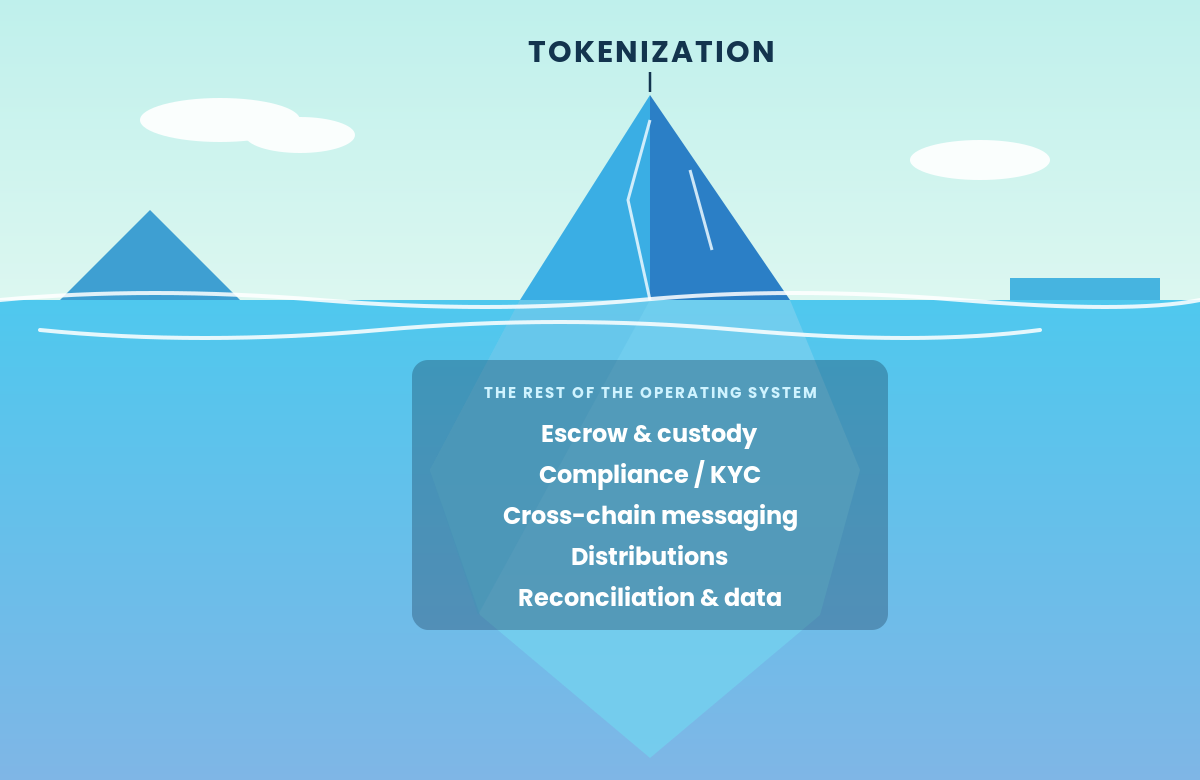
The most successful tokenization programs we see share one habit: they scope for the whole system from the start. That single discipline is what turns a promising idea into something that runs in production. The teams we work with plan carefully, and the ones who get the most out of it draw the boundary wide enough to include the value, the risk, and the cost that sit beyond the asset itself.
Tokenization is a systems decision, not a feature
There is a convenient framing in which tokenization is a discrete deliverable. You take an asset, you issue a digital representation of it, and the work is finished. In practice it behaves far more like a systems decision, with second and third order effects that reach well beyond the asset.
The moment an asset goes onchain it acquires dependencies. It connects to the chains your investors actually use. It has to interoperate with the operating model already in place, including accounting, compliance, and the systems of record a business runs on. It generates data that those functions have to consume and reconcile. Each dependency is a point of leverage when it is planned for and a point of failure when it is not.
The contract that issues the token is the most tractable part of the program. The expensive part is everything it has to integrate with. A token that cannot settle against an existing ledger, satisfy a compliance review, or deliver clean data to the teams that depend on it has not created value, rather it has created an obligation. When these programs unravel, the issuance logic is seldom the cause. The cause is usually a scoping decision made early, in which the surrounding systems were treated as a later phase rather than as part of the core design.
Separate the issuance question from the usage question
Issuance tends to absorb the attention because it is concrete, measurable, and feels like the milestone that matters, but issuing an asset and operating it are two different problems with two different risk profiles. Usage is where the economics actually play out: movement across chains, integration with infrastructure built for a different model, and data pipelines that have to hold up as volume scales. A plan that optimizes for issuance has solved the launch and left operations largely unaddressed.
A useful way to see the gap is to work through a simple use case. Take a regulated asset that has to operate across several chains. We've seen that the disciplined design keeps the canonical asset on a single home chain as the source of truth and moves compliant representations onto the chains where investors transact. That one decision carries a series of others. The asset has to sit in escrow without losing its compliance constraints. The representations have to be fully backed, with supply you can prove reconciles at any point. If distributions are involved, holders have to be paid on the chain where they hold, in an instrument valid there, on a recurring schedule someone has to operate. Eligibility has to be enforced on each chain independently, and a shared ledger has to keep the books and the chains in agreement.
None of that is the token. The token is one component in a system that also has to handle escrow, cross-chain messaging, KYC/identity, distributions, and reconciliation. Scope the program to issuance and you have planned roughly one sixth of the work that determines whether it succeeds.
Plan for optionality, because the market will move
We are still in the early innings, but things move quickly. Standards are unsettled, tooling is maturing, and the regulatory posture continues to shift. What is optimal today may not be what the business needs in a year. The correct response is not less planning. It is planning that preserves optionality.
A plan built rigidly on current assumptions carries hidden costs, because the cost of being wrong compounds as the build progresses. The stronger approach designs for the changes you can already see arriving, without committing capital to all of them now, so the system can absorb them rather than be rebuilt around them. You sequence the work in phases, each one ending in something that runs and can be demonstrated, which keeps risk visible and decisions reversible, and you maintain an explicit register of open questions, the decisions deliberately deferred until the information to make them well has arrived. Naming those decisions is a sign of discipline, not a gap in the plan.
How we work with clients at Hgraph
This is a meaningful part of what we do. We build a plan that addresses both the tokenization and the usage, and then we execute against it while adapting as conditions change, rather than treating the first version as fixed. In practice, that means assessing the full surface area before committing to a design, building for how the asset will actually be used, and staying close enough to the work to change course when the market moves, because it will.
If you are evaluating a tokenization or cross-chain initiative, the conversation worth having early is about scope, well before the first contract is written. That is the point of maximum leverage, where the cost of getting scope right is lowest and the cost of getting it wrong is highest. If that is where you are, we would welcome the conversation.
Build on the same data.
Query live onchain markets across every chain we support through one schema and one key.