Mirror Nodes: The Other Half of Hedera
The Hedera network features a distinctive two-part architecture separating transaction validation from data access. Mirror nodes are the underappreciated other half.
 Brandon Davenport/Aug 1, 2024/hederainfrastructureguides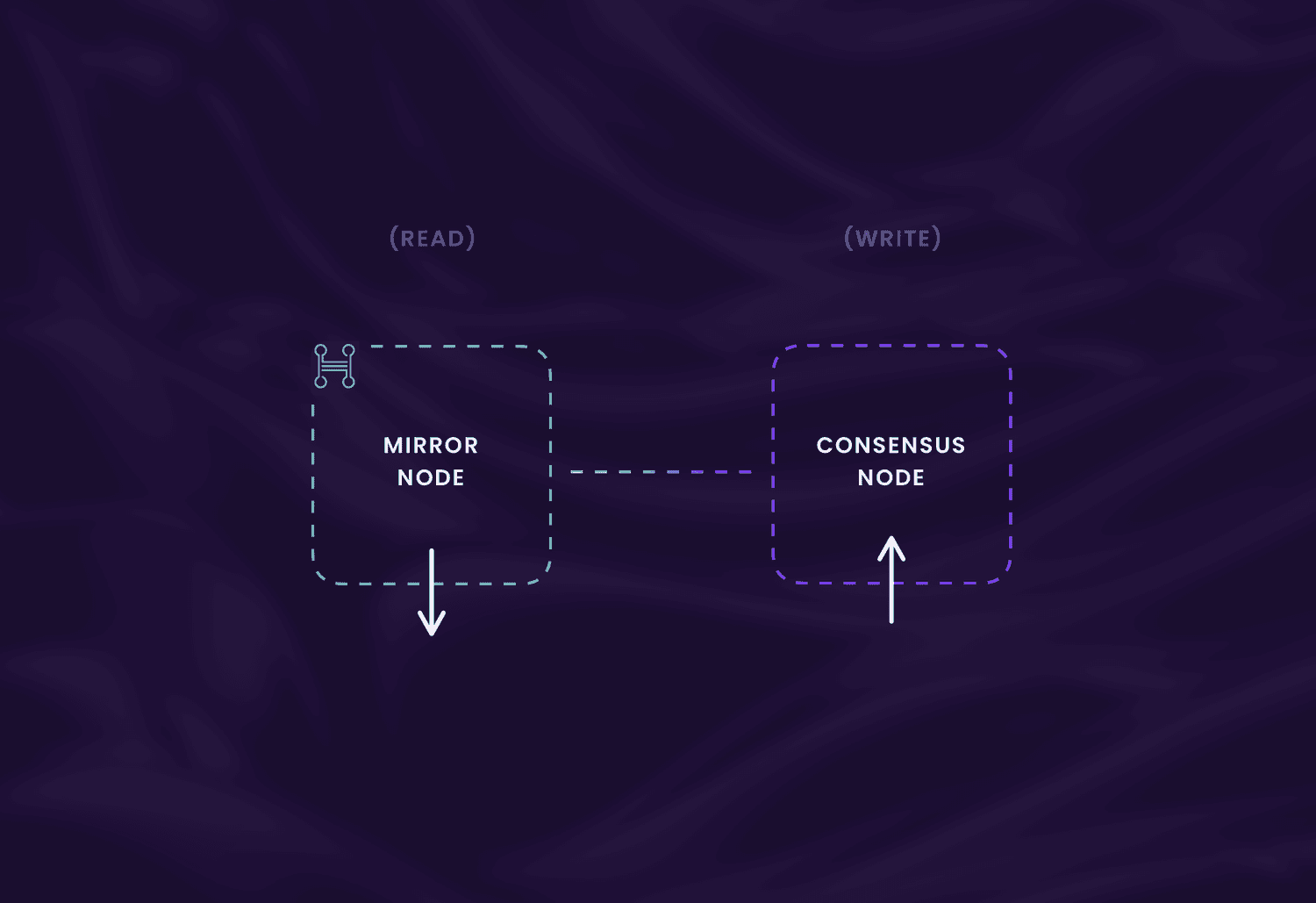
The Hedera network features a distinctive two-part architecture separating transaction validation from data access. While consensus nodes handle writing transactions, mirror nodes manage read-only historical data retrieval. This division creates what we call "the other half" of the network -- infrastructure that remains underappreciated despite its critical importance.
What Are Mirror Nodes?
Mirror nodes provide read-only access to historical blockchain data. The architecture separates consensus nodes (write operations) from mirror nodes (read operations), creating several advantages:
- Scalability: Mirror nodes offload read operations, allowing consensus nodes to focus on transaction processing without performance bottlenecks common in other blockchain systems.
- Performance: Specialized functions enable each node type to optimize its role, enhancing overall network efficiency compared to systems requiring all nodes to handle both operations.
- Security: This modular approach reduces vulnerability and overload risks by distributing responsibilities.
How Mirror Nodes Work
Mirror nodes operate through several steps: receiving transaction streams from consensus nodes, decompressing and organizing data, storing information in multi-terabyte databases, and providing access through APIs and other tools.
Operational efficiency relies on techniques including:
- Caching frequently accessed data
- Indexing critical information
- Optimizing database queries
- Verifying data integrity through cryptographic methods
- Employing compression algorithms
Real-World Applications
Mirror nodes support numerous use cases: wallet transaction histories, gaming records, DeFi platform operations, supply chain tracking, IoT sensor data management, NFT verification, real estate transactions, healthcare systems, voting mechanisms, and financial reporting.
Without mirror nodes, these applications would struggle to provide responsive and reliable user experiences that users expect, while also avoiding substantial operational overhead.
Challenges and Opportunities
Mirror node infrastructure faces sustainability challenges. High operational costs for managing dozens of terabytes of data with significant transaction volumes create funding pressures. Without adequate support, infrastructure reliability becomes questionable during high-traffic periods.
Hgraph's Role
Hgraph operates as a major mirror node provider with distinctive characteristics:
- GraphQL API flexibility
- Data science expertise
- Owned hardware infrastructure
- Proven long-term operations
- Community involvement
- Integration with major projects like HashPack and Swirlds Labs
Our mission centers on transforming infrastructure into beloved products while raising community awareness about mirror nodes' importance.
Community Call to Action
Mirror nodes deserve awareness and support comparable to other network features like ABFT or carbon neutrality. Supporting this infrastructure ensures user experience quality and enables scalability innovations within the ecosystem.
Build on the same data.
Query live onchain markets across every chain we support through one schema and one key.